
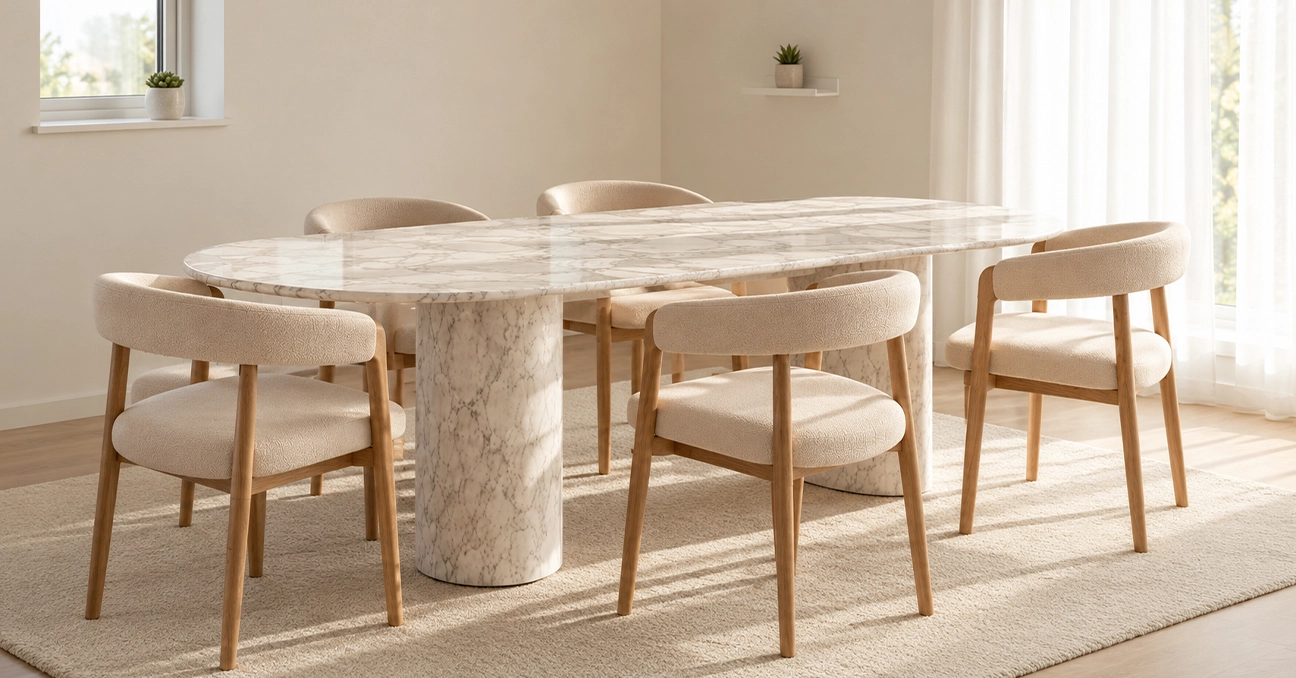
A marble dining table has presence before anyone even sits down. The stone catches light, the veining pulls your eye across the surface, and suddenly dinner feels staged against architecture rather than furniture. But looks can make shoppers overlook practical questions. Is marble difficult to maintain? Does it stain? Is the weight a problem? And does the price translate into lasting value? Before you buy a marble dining table, it helps to separate showroom drama from reality. Here is what marble brings to a dining room, where it demands compromise, and how to decide whether it fits your home.
Some furniture blends quietly into a room. Marble rarely does. Its natural veining gives every slab visual movement, creating a surface that can function as both dining furniture and a strong decorative anchor.
That visual anchor is a major reason shoppers searching for a marble dining table often place appearance high on their priority list. Pale stone can brighten a compact dining zone, while deeper zones can add visual weight to an open room. Veining can be subtle and cloudy or bold and directional, allowing buyers to choose a look that works with their existing interior.
Here is the cold fact: marble is porous. Spilled liquids can enter the surface if they remain there, particularly substances with strong pigments. Coffee, sauces, juice, and oil can leave marks when spills are ignored.
Acidic substances introduce another issue. Citrus, vinegar, and similar ingredients can react with marble and create dull areas known as etching. An etched patch is different from a stain. It changes the surface finish rather than simply adding color.
That doesn’t make marble unsuitable for dining. It simply means ownership comes with habits. Wiping spills quickly, using coasters, placing mats beneath serving dishes and following the seller’s cleaning guidance can help preserve the appearance.
Anyone comparing marble dining tables for sale should therefore ask about the finish, recommended cleaning routine, and whether periodic sealing is suggested for the specific stone.
Marble has substantial physical presence, but durability needs context. A dining table can remain functional for many years while still developing surface marks along the way. Scratches, etching, and small changes in finish may appear with regular use.
Before purchasing a natural marble dining table, think about how the table will be used. A household that hosts frequent meals, serves directly from hot dishes, or has children doing crafts at the table may want stronger everyday protection. A table used mainly for slower dinners may face fewer opportunities for spills and scratches.
Marble is heavy. That sounds obvious until delivery day arrives.
A substantial table may require several people to move, and some designs can be awkward to maneuver through narrow hallways, staircases, elevators, or right doorways. Once positioned, frequent arrangement may not be practical.
Before ordering a marble dining table, measure the complete delivery path rather than only the dining area. Record doorway widths, elevator dimensions, stair turns, corridor clearances, and the final placement zone. Ask whether the table and base arrive separately and whether assembly is required.
Marble dining tables can vary widely in price. Stone type, slab thickness, base construction, finishing, edge profile, and manufacturing complexity can affect the final figure.
This is why comparing tables by appearance alone can be fake. Two pieces may look similar in photographs yet differ considerably in dimensions, stone composition, construction, and finishing.
When browsing a marble dining table price, look beyond the headline figure. Review what is included with delivery, whether assembly is provided, what the table weighs, and what material is used throughout the piece. Some tables use natural marble across the surface, while others may use marble-effect materials or engineered alternatives.
The rise of marble-effect surfaces has given shoppers another route to the same visual direction. Ceramic, sintered stone, engineered surfaces, and printed finishes can reproduce veining while offering different maintenance requirements.
Natural marble appeals to buyers who tend to value variation. Veins, tonal shifts, and small irregularities mean the table you receive may not look identical to a sample image. That individuality is part of the natural stone.
If you are comparing a modern marble dining table with a marble-effect option, request precise material information. Product photographs can tell you how a table looks. They cannot tell you how the surface behaves during dinner.
A beautiful table that overwhelms the room quickly loses its appeal. Before falling for veining or edge details, determine how much space the dining area can comfortably support.
Allow room for chairs to pull back and for people to walk behind seated dinners. Consider nearby cabinets, doors, kitchen islands, and circulation routes. The table dimensions should suit both the room and the number of seats you expect to use regularly.
A round marble dining table can work well where softer circulation is useful, particularly in square dining zones. Rectangular tables often suit longer rooms and can create clearer seating positions. Oval designs blend some of the advantages of both shapes by providing length without sharp corners.
Online images are excellent for discovering styles, but specifications are where sensible purchasing decisions happen. Read the product page before placing an order.
Start with dimensions and weight. Then identify the surface material, base material, finish, edge profile, assembly requirements, and also cleaning instructions. Look at close photographs of the veining and understand whether natural variation can be expected.
For a marble dining table online, delivery information is especially important. Find out how the item is packaged, whether delivery reaches the room of choice, and what happens if access limitations prevent placement. Review return conditions before ordering a large, heavy piece because it moving again can be considerably harder than returning a small household item.
Marble makes sense for shoppers who want their dining table to contribute strongly to the room's visual identity. It also suits people comfortable with natural variation and willing to adopt a few practical habits around spills and surface protection.
It may be less appealing for someone who wants a surface that can be ignored after every meal. If you dislike visible wear, frequently move furniture, or expect the table to handle messy activities without protection, another material may align better with your routine.
The key is not asking whether marble is universally worthwhile. Ask whether its combination of appearance, weight, maintenance, texture, and natural variation works for the way your household actually lives.
Begin with function. Decide how many people need seats, how often the table will be used, and what happens on it beyond meals. Then establish dimensions that leave enough movement around the room.
Next, narrow the material and finish. If natural marble is your preference, learn how variation may appear and what upkeep the seller recommends. Compare base structures as closely as you compare table surfaces. A visually striking slab still needs suitable support.
When evaluating marble dining table designs, think beyond decor trends. Look at proportions, silhouette, leg placement, and how easily chairs can slide underneath. These practical details influence daily satisfaction long after the first visual impression settles.
Finally, read shipping, assembly, return, and maintenance information before purchase. The smartest buying decision happens when appearance and practical expectations meet at the same table.
Yes, with conditions. Marble earns attention because natural stone offers depth, variation, and visual presence that can make a dining table central to the room. But the material also brings weight, porosity, sensitivity to acidic substances, and an expectation of ongoing upkeep.
The right question is not whether marble deserves its reputation. It is whether you understand what that reputation leaves out.
If you want a dining surface with distinctive natural character and you are comfortable protecting it during everyday use, a marble dining table can be a compelling choice. Measure your room, study the specifications, understand the surface, and compare construction before ordering. Buy for the life happening around the table, not merely the photograph that first caught your attention.